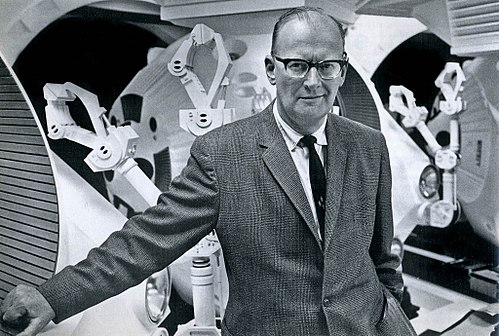
Arthur C. Clarke
Sir Arthur Charles Clarke was an English science fiction writer, science writer, futurist, inventor, undersea explorer, and television series host.
Complete Bibliography
Follow the recommended order to not miss a thing.
Isaac Asimov Presents The Great SF Stories 8
You are presented with 'Isaac Asimov Presents The Great SF Stories 8,' a novel by Arthur C. Clarke. Published in 1982, this work is an installment in the 'Isaac Asimov Presents The Great SF Stories' series. You can engage with this part of a larger literary journey. It offers you a glimpse into Arthur C. Clarke's ongoing narrative vision.

Isaac Asimov Presents The Great SF Stories 17
You are presented with a novel exploring the expanse of science fiction themes. Discover diverse visions of the future and humanity's place within it, as part of a renowned series. Experience a narrative that showcases the breadth of imaginative possibilities.
A Time Odyssey
3 Books
Time's Eye
Dive into "Time's Eye," a novel by Arthur C. Clarke from 2003, part of 'A Time Odyssey' series. This installment explores the fabric of time and its mysterious manipulations. You will encounter a narrative that challenges perceptions of history and existence.

Sunstorm
Explore the cosmic scope of Arthur C. Clarke's 'A Time Odyssey' series with the novel 'Sunstorm'. This installment continues the visionary science fiction narrative. You will encounter profound ideas about humanity's place in the universe.

Firstborn
Engage with Arthur C. Clarke's 'Firstborn,' a novel from 2007. This installment continues the 'A Time Odyssey' series, inviting you back to its unique universe. You will explore new developments within this imaginative narrative.
Sferoj
1 BooksSferoj 1
You are about to read 'Sferoj 1,' a novel by Arthur C. Clarke. This book is the first part of the 'Sferoj' series. Prepare to embark on a journey into a world of scientific imagination.
Standalone Works
142 Books




Time's Arrow
You immerse yourself in 'Time's Arrow,' an Arthur C. Clarke novel from 1950. This work transports you to a future where humanity faces new challenges. Through its pages, you explore the science fiction concepts that define the author.

A Walk in the Dark
You embark on 'A Walk in the Dark,' an Arthur C. Clarke novel from 1950. This work transports you to a setting where space exploration raises questions. It invites you to consider the unknown and the limits of human adventure.

Exile of the Eons
You are presented with a future where humanity faces an imminent threat from a mysterious cosmic entity. As scientists race against time to understand and counter this danger, you witness the desperate efforts to ensure survival. You will explore themes of deep space exploration and the resilience of the human spirit.

Guardian Angel
You encounter a future where humanity faces an existential crisis, leading to the intervention of benevolent alien beings. These "Overlords" arrive to guide Earth's development, fundamentally altering human society. You observe the profound impact of their presence and the questions it raises about humanity's destiny.
Silence Please
You are transported to a future where humanity has achieved advanced technological capabilities, including methods of interstellar travel. As scientists and explorers push the boundaries of knowledge, you encounter the unexpected consequences of their ambition. You will ponder the ethical implications of scientific progress and the mysteries of the cosmos.

Interplanetary Flight: An Introduction to Astronautics
Interplanetary Flight: An Introduction to Astronautics is a short, modestly technical introduction to space exploration written by Arthur C. Clarke, and published in 1950. It includes material accessible to readers with a high-school level of science and technical education, covering the elements of orbital mechanics, rocket design and performance, various applications of Earth satellites, a discussion of the more interesting and accessible destinations in the Solar System, and in a final chapter covering the rationale and value of human expansion off the Earth.

Second Dawn
You immerse yourself in 'Second Dawn,' an Arthur C. Clarke novel from 1951. This work transports you to a future where humanity faces new challenges. Through its pages, you explore the science fiction concepts that define the author.
Trouble with the Natives
Arthur C. Clarke's 1951 novel, *Trouble with the Natives*, places you in a scenario where friction arises with local populations. You will observe the unfolding of these difficulties within the narrative. The story encourages you to consider the nature of such encounters.
Holiday on the Moon
Arthur C. Clarke's 1951 novel, *Holiday on the Moon*, transports you to an extraterrestrial vacation. You will explore the implications of leisure travel beyond Earth's confines. This narrative invites you to imagine a lunar getaway and its unique experiences.

Earthlight
Arthur C. Clarke's 1951 novel, *Earthlight*, transports you to a setting where Earth's glow illuminates the narrative. You will explore the relationship between humanity and its home planet from a different vantage point. This story invites you to consider perspectives from afar.

The Road to the Sea
Arthur C. Clarke's 1951 novel, *The Road to the Sea*, guides you on a journey towards a significant destination. You will explore the paths taken and the discoveries made along the way. This narrative invites you to consider the allure and implications of reaching a profound end point.

Superiority
You will encounter 'Superiority', a novel by Arthur C. Clarke. Published in 1951, this text represents a part of the author's extensive literary journey. Consider this specific work as an example of his narrative style.

Prelude to Space
Arthur C. Clarke's 1951 novel, *Prelude to Space*, sets the stage for humanity's ventures beyond Earth. You will explore the foundational steps leading to space exploration. This narrative invites you to consider the early dreams and preparations for interstellar travel.

The Sentinel
Arthur C. Clarke's 1951 novel, "The Sentinel," transports you to the vastness of space. You will discover an enigmatic object that challenges human understanding and perception. This story offers a glimpse into potential encounters with the unknown beyond Earth.
If I Forget Thee, Oh Earth
Arthur C. Clarke's 1951 novel, "If I Forget Thee, Oh Earth," takes you on a journey to a future where humanity faces an unprecedented challenge. You will explore themes of survival and the enduring memory of a lost home. This story offers a poignant reflection on our connection to Earth.

The Sands of Mars
In Arthur C. Clarke's 1951 novel, "The Sands of Mars," you will venture to the red planet as humanity establishes a new frontier. This story explores the challenges and potential of colonizing another world. You will witness the efforts to transform Mars into a habitable environment.


All the Time in the World
Arthur C. Clarke's 1952 novel, "All the Time in the World," transports you to a realm of scientific speculation. You will explore narratives that challenge perceptions of time, technology, and human potential. This work invites you to consider the vastness of the universe and our place within it. Prepare for a journey that expands the imagination.

Islands in the Sky
Arthur C. Clarke's novel invites you to imagine a future where humanity reaches for the stars. You will explore life aboard orbital stations, encountering the challenges and wonders of space colonization. Discover a world of scientific possibility and human ambition beyond Earth's atmosphere.

Against the Fall of Night
You are presented with 'Against the Fall of Night', a novel by Arthur C. Clarke, released in 1953. Its Spanish title is 'Tras la caída de la noche'. This work invites you to delve into a narrative from the author.

The Possessed
Discover 'The Possessed', a novel by Arthur C. Clarke published in 1953. The Spanish translation of the title is 'Los poseídos'. This standalone work invites you into a narrative from the author.

Childhood's End
Discover 'Childhood's End', a novel by Arthur C. Clarke from 1953. Its Spanish title is 'El fin de la infancia'. This single volume offers a standalone narrative from the author.

Jupiter Five
You embark on a journey through the vastness of space, encountering the mysteries of our solar system. Explore a celestial body with hidden secrets and the implications of its discovery. This narrative invites you to ponder humanity's place among the stars and the wonders yet to be uncovered.
Encounter in the Dawn
You witness a pivotal moment in humanity's distant past, a formative encounter that shapes the course of evolution. Discover the origins of intelligence and the first steps towards civilization. This story invites you to imagine the dawn of consciousness and its profound impact.

The Other Tiger
Arthur C. Clarke's "The Other Tiger" invites you to explore a compelling narrative from 1953. As a novel, it presents you with an intriguing premise to ponder. You will delve into a story that reflects the author's imaginative scope and storytelling prowess.
The Parasite
In Arthur C. Clarke's "The Parasite," you are drawn into a standalone narrative from 1953. This novel presents a unique concept to engage your imagination. You will explore a story that exemplifies the author's signature blend of scientific speculation and human drama.

Publicity Campaign
Arthur C. Clarke's "Publicity Campaign" invites you into a distinct narrative from 1953. As a novel, it presents a compelling scenario for you to consider. You will delve into a story that showcases the author's imaginative scope and unique storytelling.
Expedition to Earth
Consider 'Expedition to Earth', a novel by Arthur C. Clarke, published in 1953. This work offers a standalone narrative from the science fiction author. You can explore the themes presented within this particular volume.
Patent Pending
You can discover 'Patent Pending,' a novel by Arthur C. Clarke published in 1954. This work offers you a particular narrative from Clarke's authorship. Delve into a story presented as a standalone novel.

This Earth of Majesty
You are transported to a vision of Earth, viewed through a lens of wonder and scientific curiosity. Explore the planet's grandeur and its potential future, as imagined by a master of speculative fiction. This narrative invites you to ponder humanity's place within a vast and magnificent universe.

No Morning After
You are plunged into a scenario where the consequences of a unique event unfold with far-reaching implications. Discover how characters grapple with an altered reality and the challenges it presents. This story explores themes of survival and adaptation in the face of the unknown.
Armaments Race
You are invited to explore 'Armaments Race,' a novel by Arthur C. Clarke from 1954. This work offers you a particular narrative from Clarke's authorship. You can delve into a story presented as a standalone novel.
The Star
Discover 'The Star,' a novel by Arthur C. Clarke published in 1955. This work offers you a singular narrative from Clarke's authorship. You can immerse yourself in a story presented as a standalone novel.

The Deep Range
Dive into "The Deep Range," a 1955 novel by Arthur C. Clarke. This story transports you to an underwater world, exploring humanity's interaction with the ocean's vastness. You will discover the challenges and wonders of a submerged future.

Big Game Hunt
You are invited to explore 'Big Game Hunt,' a novel by Arthur C. Clarke. Published in 1956, this work offers you a distinct narrative experience. Delve into the imaginative world created by this author in this single volume.

What Goes Up
You are invited to explore 'What Goes Up,' a novel by Arthur C. Clarke. Published in 1956, this work offers you a distinct narrative experience. Delve into the imaginative world created by this author in this single volume.

Reach for Tomorrow
You are presented with 'Reach for Tomorrow,' a 1956 novel by Arthur C. Clarke. This publication invites you to delve into its story. You will experience a piece of fiction from an author prominent in his field.
The Pacifist
In 'The Pacifist,' a novel from 1956 by Arthur C. Clarke, you find a distinct literary offering. This book encourages you to consider its narrative. It stands as an example of the author's work from that period.
Security Check
Enter a world where technological advancements intersect with human security in Arthur C. Clarke's "Security Check." You will encounter scenarios that explore the implications of advanced systems. This novel prompts reflection on privacy and control in a futuristic context.
Venture to the Moon
You are invited to explore 'Venture to the Moon,' a novel by Arthur C. Clarke. Published in 1956, this work offers you a distinct narrative experience. Delve into the imaginative world created by this author in this single volume.

The Reluctant Orchid
Discover 'The Reluctant Orchid,' a novel by Arthur C. Clarke. This work, published in 1956, presents you with a unique literary journey. You will engage with the narrative vision of this distinguished author within its pages.
The City and the Stars
You are invited to explore 'The City and the Stars,' a 1956 novel by Arthur C. Clarke. This work presents you with a narrative crafted by a notable author. Engage with a text that exemplifies the fiction of its era.
The Ultimate Melody
"The Ultimate Melody" is a science fiction short story by British writer Arthur C. Clarke, first published in 1957. The story describes the work of a physiologist who attempts to discover the connections between music and the rhythms of the electrical pulses in the brain.
Sleeping Beauty
Arthur C. Clarke's 1957 novel, "Sleeping Beauty," invites you to explore a narrative centered on themes of dormancy or awakening. You will encounter a story that reinterprets or draws upon the essence of a classic motif. This work prompts contemplation on time, stasis, and transformation.
The Other Side of the Sky
Gaze beyond the familiar in this 1957 novel by Arthur C. Clarke. You are invited to explore perspectives and realms beyond what is commonly perceived. The narrative takes you to new horizons and challenges your understanding of the cosmos. Discover what lies on "The Other Side of the Sky."
The Man Who Ploughed the Sea
You encounter a visionary narrative about human ingenuity applied to the vastness of the ocean. Discover how a remarkable individual seeks to harness the sea in unprecedented ways. This story explores the potential for innovation and humanity's relationship with its environment.

Let There Be Light
Arthur C. Clarke's 1957 novel, "Let There Be Light," invites you to consider the emergence of new understanding or revelation. You will explore a narrative that suggests significant change or discovery. This work prompts reflection on progress and enlightenment.

Tales from the White Hart
You are welcomed into the world of "Tales from the White Hart," a 1957 novel by Arthur C. Clarke. This collection likely presents various stories set within or originating from a particular establishment. Prepare for narratives that blend imagination with the camaraderie of storytelling.

Moving Spirit
In Arthur C. Clarke's 1957 novel, "Moving Spirit," you are invited to explore concepts of dynamism and influence. This work presents a narrative that delves into forces that drive change or inspiration. You will consider the nature of impetus and its impact.
The Next Tenants
Arthur C. Clarke's 1957 novel, "The Next Tenants," invites you to consider the future inhabitants of a place or world. This work explores themes of succession, evolution, or the unknown entities that might follow. You will contemplate the legacy left behind and those who will inherit it.
The Defenestration of Ermintrude Inch
Discover a curious event in this 1957 novel by Arthur C. Clarke. You are introduced to the peculiar incident involving Ermintrude Inch. The narrative unfolds around this unique premise, inviting you to explore its circumstances. Consider the unexpected implications of a defenestration within this work.

Cold War
Experience a period of global tension through Arthur C. Clarke's 1957 novel. You are immersed in a narrative that reflects the political climate of the era. The story explores the complexities and potential outcomes of a sustained, non-military conflict. Discover the insights offered by "Cold War" within its pages.

Out of the Sun
Immerse yourself in *Out of the Sun*, a novel by Arthur C. Clarke from 1958. This work takes you into a speculative narrative exploring its intriguing premise. You will encounter the author's vision within the genre.
A Slight Case of Sunstroke
You are invited into a narrative where an unusual solar event casts a long shadow over humanity. Discover how an unexpected atmospheric phenomenon challenges conventional understanding and alters daily life. This story explores the subtle yet profound impacts of a unique cosmic occurrence.
Cosmic Casanova
You follow a character whose romantic pursuits extend beyond Earth, encountering interstellar complexities. Discover how personal desires intersect with the vastness of space and alien cultures. This story explores the universal themes of love and connection in an extraordinary setting.

Who's There?
You encounter a narrative exploring the mysteries of presence and absence in an intriguing setting. Consider the nature of perception and the unknown as characters grapple with an unseen force. This story invites you to question what lies beyond immediate understanding.

The Songs of Distant Earth
In "The Songs of Distant Earth," Arthur C. Clarke presents a novel published in 1958. You will encounter a narrative exploring themes typical of Clarke's work. Consider this a journey into a specific vision of the future or human experience.
Out of the Cradle, Endlessly Orbiting...
Arthur C. Clarke's 1959 novel launches you into an expansive vision of the future. You will embark on a journey that transcends earthly bounds, exploring themes of space and human ambition. This narrative invites you to consider humanity's place among the stars. Prepare for a story that reaches beyond our planet.
Into the Comet
You are invited to explore 'Into the Comet,' a novel from 1960 by Arthur C. Clarke. This work offers a journey into the author's distinctive narrative style. As you delve into its pages, you will encounter the unique perspectives characteristic of Clarke's writing. Consider this an opportunity to experience a piece of mid-20th-century fiction.
Summertime on Icarus
Arthur C. Clarke transports you to a unique celestial location in this novel. You will experience a narrative set during a specific season on 'Icarus'. Prepare for an adventure exploring the challenges and wonders of this distant world.
I Remember Babylon
You are invited to explore 'I Remember Babylon,' a novel from 1960 by Arthur C. Clarke. This work offers a journey into the author's distinctive narrative style. As you delve into its pages, you will encounter the unique perspectives characteristic of Clarke's writing. Consider this an opportunity to experience a piece of mid-20th-century fiction.

Trouble with Time
You are invited to explore the complexities of time through the lens of Arthur C. Clarke's science fiction. Discover how chronological disruptions can shape human experience and destiny. This narrative will provoke thought on the boundaries of what is possible.

Hate
Consider "Hate," a novel by the distinguished Arthur C. Clarke. Also known as "Odio," this work was released in 1961. You are invited to explore the narrative themes presented by this science fiction master.

Death and the Senator
Explore "Death and the Senator," a novel from the prolific Arthur C. Clarke. This work, published in 1961, presents a narrative that engages with its titular concepts. You will find a compelling story from this celebrated author.
Saturn Rising
Discover "Saturn Rising," a novel by the visionary Arthur C. Clarke. Released in 1961, this work invites you to consider its exploration of celestial themes. You will find a narrative characteristic of this influential science fiction writer.
Before Eden
Discover "Before Eden," a novel by the imaginative Arthur C. Clarke. Released in 1961, this work offers a narrative exploration of its suggestive title. You are invited to delve into the concepts presented by this renowned science fiction writer.

Love that Universe
Arthur C. Clarke's novel invites you to contemplate the vastness of existence. You will explore themes of connection and appreciation for the cosmic scale. Discover a narrative that embraces the wonders of the universe.

A Fall of Moondust
In Arthur C. Clarke's novel, you will journey to a lunar landscape where an unusual event unfolds. You are invited to witness the challenges faced by those caught in a unique predicament. Explore the implications of a 'fall of moondust' as imagined by this author.
An Ape About the House
You are about to delve into "An Ape About the House," a novel by Arthur C. Clarke published in 1962. Discover the unique premise presented by this author. Engage with its narrative as you read through the pages.
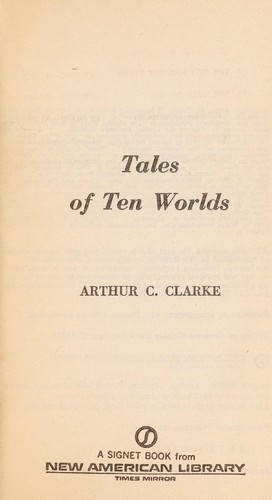
Tales of Ten Worlds
Tales of Ten Worlds is a collection of science fiction short stories by British writer Arthur C. Clarke. The stories all originally appeared in a number of different publications.
The Shining Ones
You will embark on a journey into the mysteries of the unknown. This novel presents a narrative where humanity encounters enigmatic entities. Explore the implications of such encounters on our understanding of existence and the universe.

Dog Star
In Arthur C. Clarke's 1962 novel, 'Dog Star,' you are presented with a narrative that involves a celestial body. This work explores the relationship between humanity and the cosmos, often through a lens of wonder. You will encounter the implications of astronomical events on individuals or societies. Discover a story that blends scientific imagination with human experience.

Glide Path
Arthur C. Clarke's 1963 novel, 'Glide Path,' transports you to a specific moment in technological history. This work offers a fictionalized account related to aviation and scientific development. You will explore the challenges and innovations faced during a pivotal era. Consider this novel for an engaging look at human ingenuity and progress.
The Secret
Arthur C. Clarke's 1963 novel, "The Secret", invites you into a world where discovery and hidden truths are central. You will follow a narrative that explores the implications of uncovering something profound. Prepare for a journey into the unknown, characteristic of this science fiction master.

Dolphin Island
In Arthur C. Clarke's 1963 novel, "Dolphin Island", you are transported to an aquatic world where communication with dolphins is central. The story invites you to consider humanity's relationship with marine life and the potential for interspecies understanding. You will embark on an adventure exploring themes of survival and discovery in an oceanic setting.

The Last Command
Arthur C. Clarke's 1963 novel, 'The Last Command,' invites you to contemplate themes of power and ultimate directives. This work explores a scenario where a final instruction carries significant weight. You will encounter the implications of authority and its reach. Consider this novel for a thoughtful exploration of command and consequence.

The Food of the Gods
Arthur C. Clarke's 1964 novel, "The Food of the Gods," presents you with a speculative narrative. You will explore concepts related to a mysterious substance and its effects. The story invites you to consider its implications within a unique setting.

Sunjammer
You are invited to explore a work by Arthur C. Clarke, originally published in 1964. This novel, titled 'Sunjammer,' offers a journey into the author's vision. Immerse yourself in this standalone narrative from a master of science fiction.

Dial F for Frankenstein
You are presented with *Dial F for Frankenstein*, a novel by Arthur C. Clarke. This work, published in 1965, invites you to explore the narrative landscape of its time. Delve into a story crafted by this notable author within the novelistic tradition.

Maelstrom II
In Arthur C. Clarke's 1965 novel, "Maelstrom II," you delve into a narrative that continues a specific storyline. You will explore a world impacted by the events of its predecessor. The story offers further insight into the author's vision.
The Light of Darkness
You encounter a work by Arthur C. Clarke, "The Light of Darkness." This novel presents a paradoxical title, inviting you to explore themes of contrast and hidden illumination. Consider the deeper meanings implied by this intriguing juxtaposition.
The Longest Science-Fiction Story Ever Told
Arthur C. Clarke's 1966 novel, 'The Longest Science-Fiction Story Ever Told,' immerses you in an extensive science fiction narrative. You will encounter a story that challenges conventions of length within the genre. Prepare for a prolonged exploration of futuristic concepts and imaginative scenarios.

Playback
You are invited to explore a novel by Arthur C. Clarke, originally published in 1966. Prepare to engage with a narrative crafted by a visionary in science fiction. As you turn the pages, you will encounter the expansive storytelling characteristic of his work. This novel offers a glimpse into a specific moment in literary history.

Herbert George Wells Morley Roberts, Esq.
You are presented with a novel by Arthur C. Clarke, published in 1967. This work carries a distinctive title, focusing on a named individual. You are invited to discover the narrative within this unique literary offering.

The Cruel Sky
You are invited to witness a compelling struggle against the unforgiving forces of nature and ambition. This narrative explores the human drive to conquer challenging environments and reach new heights. Discover the resilience of individuals pushed to their limits beneath a vast, indifferent sky.
The Nine Billion Names of God
You are drawn into a profound contemplation of humanity's place in the universe, as a team embarks on an extraordinary computational task. This narrative explores the ultimate purpose of existence and the surprising implications of fulfilling an ancient prophecy. Prepare for a story that challenges your perception of time and destiny.

The Lion of Comarre and Against the Fall of Night
Arthur C. Clarke's 'The Lion of Comarre and Against the Fall of Night' presents you with a novel. This work combines two distinct narratives, each exploring themes of struggle and resilience. You will encounter tales of unique challenges within their respective settings.

Crusade
Arthur C. Clarke presents 'Crusade,' a novel published in 1968. Within its pages, you will delve into a standalone narrative from this author. You will discover the plot and elements that compose this singular work.
Neutron Tide
Arthur C. Clarke invites you to explore scientific concepts and cosmic possibilities in "Neutron Tide." You will encounter a narrative that ponders humanity's place in the vastness of space. This novel offers a thoughtful journey into the unknown.

A Meeting with Medusa
Engage with "A Meeting with Medusa," a novel by Arthur C. Clarke from 1971. This book presents a narrative exploring an encounter with a unique entity. You will follow the unfolding events of this specific interaction.

Reunion
You encounter a story by Arthur C. Clarke exploring the concept of reunion. Delve into the potential implications of a significant re-encounter, as imagined by this renowned author. This novel suggests a narrative arc centered on convergence and connection.
Transit of Earth
You will experience a unique cosmic event in "Transit of Earth." This novel places you amidst the challenges and wonders of space exploration. Prepare for a narrative that contemplates humanity's place in the vastness of the universe.
When the Twerms Came
"When the Twerms Came" is a short story by British author Arthur C. Clarke that was first published in Playboy magazine, alongside illustrations by Skip Williamson. It deals with an invasion of Earth one wet Tuesday afternoon by deadly Twerms.

The Lost Worlds of 2001
You are invited to journey through the expansive imagination of a science fiction visionary. This novel offers a unique perspective on the universe established in '2001', exploring its unseen dimensions and untold stories. Prepare to discover new facets of a familiar cosmic landscape.

The Wind from the Sun
You will explore a future where humanity harnesses the power of the sun for propulsion. Journey through space on solar sails, experiencing the challenges and wonders of interstellar travel. Discover the ingenuity required to navigate the cosmos using light itself. This narrative invites you to ponder the next frontiers of human exploration and technological advancement.

The Best of Arthur C. Clarke
You are presented with 'The Best of Arthur C. Clarke,' a novel that compiles significant works by the renowned author. This collection invites you to explore various facets of scientific and speculative fiction. You will encounter narratives that challenge your imagination and explore the future of humanity. Prepare to engage with Clarke's profound vision of the cosmos and technology.

Imperial Earth
You are invited to explore a future where humanity has reached beyond Earth. Join a protagonist on a journey from Titan back to Earth. Discover the political and personal stakes involved in a crucial mission.

The View from Serendip
You discover "The View from Serendip," a 1977 novel by Arthur C. Clarke. This work presents a narrative from the acclaimed author. It offers a story crafted within the science fiction genre, inviting you to consider its ideas.

Quarantine
Discover "Quarantine," a novel by Arthur C. Clarke. You will be transported to a setting where isolation plays a crucial role, characteristic of the author's visionary storytelling in 1977. Unravel the mysteries within this confined world.

The Science Fictional Solar System
Arthur C. Clarke's 1979 novel, 'The Science Fictional Solar System,' guides you through a speculative exploration of our celestial neighborhood. This book delves into various concepts related to the solar system through a fictional lens. You will consider imaginative possibilities for space and its inhabitants.
The Fountains of Paradise
You are invited to delve into "The Fountains of Paradise," also known as "Las fuentes del paraíso," a novel by Arthur C. Clarke from 1979. This work showcases the author's imaginative scope within the novel form. Prepare to engage with a story that exemplifies Clarke's narrative vision.
siseneG
Arthur C. Clarke's novel, "siseneG," published in 1984, invites you to explore a futuristic vision. This work, from a renowned science fiction author, delves into speculative concepts. You will encounter a narrative that challenges your understanding of technology and existence. Prepare for an imaginative journey into the unknown.

Histoires de catastrophes
You encounter 'Histoires de catastrophes,' a novel by Arthur C. Clarke. Published in 1985, this work invites you to explore its pages. Discover a narrative from this author, presented under its distinctive title.
The Steam-Powered Word Processor
Discover "The Steam-Powered Word Processor," a novel by Arthur C. Clarke, published in 1986. You will encounter a narrative that blends technological concepts with imaginative storytelling. This work invites you to consider a unique vision of innovation and its implications.

On Golden Seas
In this 1986 novel by Arthur C. Clarke, you embark on a journey across golden seas. Discover the mysteries and wonders suggested by this vast setting. This work invites you to explore an imaginative maritime world.

Cradle
Explore a scientific mystery that pushes the boundaries of human understanding. You will accompany characters as they uncover an astonishing discovery hidden beneath the ocean's surface. This novel invites you to ponder humanity's place in the cosmos and the potential for life beyond our expectations.

Astounding Days: A Science Fictional Autobiography
Engage with 'Astounding Days: A Science Fictional Autobiography,' a 1989 novel by Arthur C. Clarke. You are presented with a unique blend of narrative and personal reflection from this distinguished author. Explore the intersection of his life and the genre he helped shape.

Tales from Planet Earth
Discover "Tales from Planet Earth," a novel by Arthur C. Clarke. This work was published in 1990. Immerse yourself in the narratives presented by this science fiction visionary.
The Jet-Propelled Time Machine
Arthur C. Clarke's 'The Jet-Propelled Time Machine' offers a journey through speculative fiction. You will encounter a narrative centered around the fascinating concept of time travel. This novel promises an inventive exploration of temporal mechanics and adventure.

Beyond the Fall of Night
You are considering 'Beyond the Fall of Night / A la caída de la noche,' a novel by Arthur C. Clarke. This work was published in 1990. Engage with the narrative presented in this standalone novel.

The Ghost from the Grand Banks
Explore 'The Ghost from the Grand Banks,' a novel by Arthur C. Clarke published in 1990. You are invited to delve into a narrative shaped by this distinguished author. Discover the themes and world presented as you immerse yourself in its story.

How the World Was One: Beyond the Global Village
Consider "How the World Was One: Beyond the Global Village" by Arthur C. Clarke. This 1992 novel explores its themes within a fictional setting. You immerse yourself in its narrative premise.

The Hammer of God
You are presented with The Hammer of God / El martillo de Dios, a novel by Arthur C. Clarke. This work offers you a narrative experience. Explore the world crafted by this author in this particular genre.

The Wire Continuum
Arthur C. Clarke takes you on a journey into the future with 'The Wire Continuum.' You encounter advanced technology and conceptual challenges. This novel invites you to ponder the possibilities of scientific progress.

The Playboy Book of Science Fiction
You are invited to delve into 'The Playboy Book of Science Fiction', a novel by Arthur C. Clarke from 1998. This work offers you an exploration of Clarke's narrative. Discover the unique world and characters presented within its pages.
Improving the Neighbourhood
"Improving the Neighbourhood" is a science fiction short story by English writer Arthur C. Clarke. It was first published in Nature on 4 November 1999 and was the first piece of science fiction Nature ever published.

The Trigger
You are presented with 'The Trigger', a novel by Arthur C. Clarke from 1999. This work invites you to explore a narrative that likely involves a pivotal event or discovery. As you read, you will uncover the implications of its central concept.
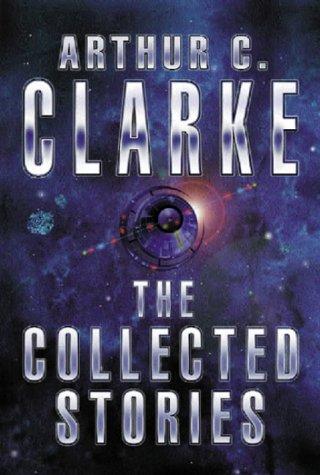
The Collected Stories of Arthur C. Clarke
In "The Collected Stories of Arthur C. Clarke," published in 2001, you encounter a compilation of works by Arthur C. Clarke. Despite its title, this publication is categorized as a novel. It offers you a comprehensive look at the author's diverse narratives. You will discover a significant body of fiction from this esteemed writer.

The Last Theorem
Delve into 'The Last Theorem,' a novel by Arthur C. Clarke, published in 2008. This work offers a narrative that focuses on specific concepts. You will find yourself exploring the ideas and developments presented within its plot.
Rama
4 Books
Rendezvous with Rama
You encounter 'Rendezvous with Rama,' a novel penned by Arthur C. Clarke. This work was originally published in 1973. Immerse yourself in the narrative crafted by this esteemed author. Explore the themes and characters presented within its pages.

Rama II
Arthur C. Clarke's "Rama II" continues the epic journey within the renowned Rama series. You return to the mysteries of the colossal alien spacecraft, exploring new facets of its purpose and origins. This novel expands on the themes of cosmic discovery and humanity's place in the universe.

The Garden of Rama
Arthur C. Clarke's 1991 novel, The Garden of Rama, continues the epic journey within the 'Rama' series. You will further explore the mysteries of the colossal alien spacecraft and its inhabitants. This installment invites you to ponder humanity's place in the cosmos and encounter new wonders.

Rama Revealed
You are presented with "Rama Revealed", a novel by Arthur C. Clarke. Published in 1993, this work is a part of the 'Rama' series. It invites you to explore its unfolding narrative.


